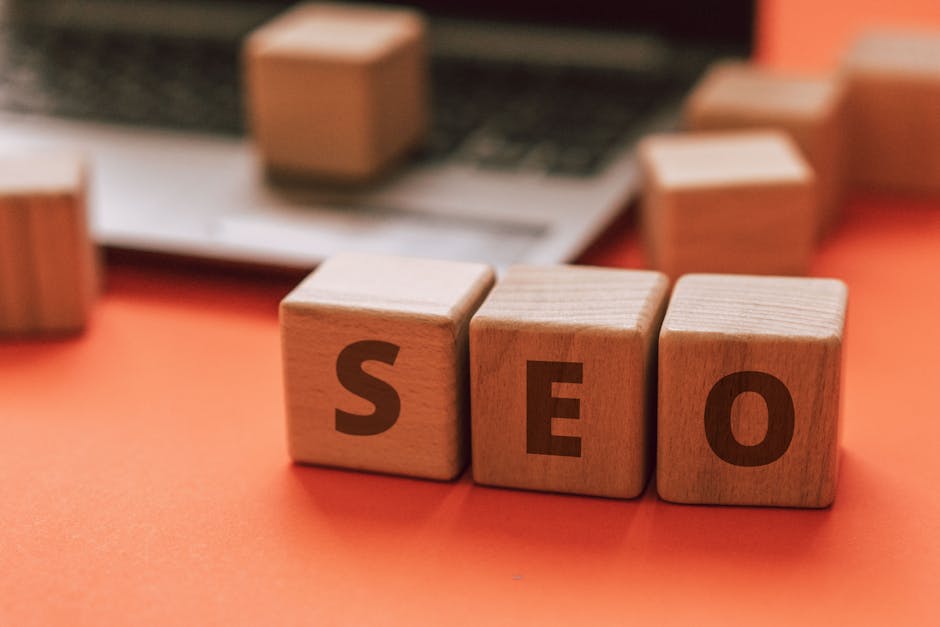
You don't need to drop thousands on fancy SEO tools to get found on Google. The truth is simpler: the right SEO tool for your small business depends on what you're actually trying to do—keyword research, tracking rankings, checking backlinks, or finding content ideas.
Let's cut through the noise and talk about which SEO tools actually move the needle for small business owners who are busy and budget-conscious.
Related: AI Marketing Tools for Small Business: A Practical Guide
Related: Content Marketing for Small Business: A Practical Guide
What SEO Tools Actually Do (And Why You Need One)
SEO tools do one core job: they help you understand what Google sees and what your customers are searching for. Different tools specialize in different parts of that puzzle.
Some tools find keywords your competitors are ranking for. Others show you which websites are linking to your site (or theirs). Some track whether your rankings are climbing or dropping week to week. A few do everything, but those get expensive fast.
Here's the practical reality: if you're building SEO as a small business owner, you need visibility into three things. First, what keywords matter for your industry. Second, how your site performs in Google search. Third, what your competitors are doing so you're not working blind.
The good news? You can get all three without paying premium prices.
Start With Google's Free Tools (Seriously)
Before you pay for anything, use what Google gives you for free. Google Search Console and Google Analytics are the foundation. They're competitive with paid tools in 2026 and they connect directly to your actual Google performance data.
Google Search Console shows you which searches bring people to your site, how often you appear in results, and which pages need work. It's genuinely powerful and it costs zero dollars.
Google Analytics tells you what people do after they arrive—do they read your content, contact you, or bounce? Both tools are essential, both are free, and both integrate seamlessly because Google owns them.
If you've never used these, start here. Seriously. Don't jump to paid tools until you understand what these are telling you about your business.
Budget SEO Tools for Keyword Research
Once you've got the free tools running, the next step is understanding which keywords your potential customers are actually searching for. This is where most small business owners feel stuck because proper keyword research usually costs money.
The free options exist, but they're limited. Google Keyword Planner (free with a Google Ads account) gives you search volume data, though the numbers are broad ranges rather than exact counts. It works if you're starting from scratch.
For slightly more detail, Ubersuggest has a free tier that shows keyword volume, difficulty, and related search terms. It's not as polished as the premium version, but it's honest work for zero cost.
The honest take: if keyword research matters to your business (and for most small businesses it should), a paid tool is worth the investment. But don't start there. Prove to yourself first that you'll actually use the data before you commit money.
Tracking Your Rankings Without Breaking the Bank

Knowing your keywords is one thing. Knowing whether you're actually ranking for them is another. Rank tracking tools monitor where your site appears in Google search results over time.
This matters because you need proof that your SEO work is working. If you're writing content, optimizing pages, or building backlinks, you should see your rankings improve. If they don't, something's wrong and you need to know.
Free rank trackers exist, but they're usually limited to tracking a handful of keywords. Paid options start small (under $50/month for basic plans) and scale up. Most small businesses need to track 20-50 keywords, and that's usually available in the entry-level paid tier.
Why does this matter for your business? Because you can't improve what you don't measure. Rank tracking is how you prove to yourself (and to your team or an SEO person helping you) that the work is actually moving the needle.
Content Ideas and Trend Research
One of the hardest parts of SEO for small businesses is figuring out what to write about. You know your industry, but what do your customers actually want to read?
BuzzSumo excels at trend reporting and search trend analysis. You can see what topics are getting traction in your industry, what your competitors are writing about, and what content is actually performing well. It's superior for small business owners who want to ideate content without guessing.
This is where AI-era readiness matters. Modern SEO tools in 2026 incorporate AI capabilities to help you understand search intent faster and spot content gaps you're missing. BuzzSumo integrates this into their workflow, which saves you the back-and-forth between multiple tools.
The payoff: you write content your audience actually wants to read, which means better rankings, better engagement, and more actual business results.
How to Choose an SEO Tool for Your Situation
Here's the framework. First, match the tool to your skill level. If you're new to SEO, avoid tools with overwhelming dashboards. You want something that answers simple questions: "Am I ranking?" "What are people searching for?" "What do I need to write about?"
Second, assess your specific needs. Are you trying to rank locally (your city or region)? Then local SEO tools matter more than national competitor analysis. Are you a content creator? Then trend research and topic ideation tools are worth the investment. Are you trying to improve an existing site? Then rank tracking and backlink analysis are your priorities.
Third, budget-conscious solutions exist at every level. You don't need the enterprise plan. Most small businesses succeed with free tools plus one or two paid tools targeting their specific bottleneck. That's usually $30-100/month, not $500.
When you're ready to move beyond the free Google tools and build a real SEO strategy, Chris Bevan covers exactly how to structure this for small business.
Recommended tool
See how overrank works →Common SEO Tool Mistakes to Avoid

Mistake one: subscribing to five tools at once. You'll use two of them and waste money on the other three. Start with one tool solving your biggest problem. Add more as you grow.
Mistake two: trusting tool estimates more than Google's data. SEO tools give you approximations, insights, and helpful context. But Google Search Console is ground truth—it's your actual performance. If a tool says you should rank for something but your Search Console says you're getting zero impressions, trust Google.
Mistake three: setting it and forgetting it. Tools are only useful if you actually look at the data and act on it. Pick a day each week to review rankings, search traffic, or content performance. That review habit is what separates small businesses that see SEO results from those that pay for tools and never see ROI.
Mistake four: choosing based on price alone. The cheapest tool isn't the best tool if it doesn't answer your actual questions. Free tools are amazing, but if your business needs rank tracking and the free option only tracks five keywords, paying for a better tier is the right call.
Building Your SEO Stack for 2026
Here's what a lean, functional SEO setup looks like for most small businesses in 2026:
- Google Search Console and Google Analytics (free)
- One keyword research tool (free or $20-50/month)
- One rank tracker (free for small keywords, $30-100/month for more)
- One content research tool if you're serious about blog content (optional, $50-150/month)
That's it. That covers keyword research, performance tracking, competitive insight, and content planning. You're not paying for features you'll never use, and you've got the visibility you need to actually improve your rankings.
The real power isn't in the tool—it's in what you do with the data. If you're consistently creating content for keywords you've researched, optimizing your pages, and tracking whether it's working, you'll see results. The tool just makes that process less painful.
If you're building SEO as part of your broader strategy to get found online, the fundamentals of SEO content matter more than the tool. Pick something that works for your budget and skill level, learn how to use it properly, and focus on the work itself.
SEO Tools and AI in Your Workflow
Modern SEO tools are incorporating AI in smart ways. They're helping you understand search intent faster, spotting content gaps, and suggesting optimizations you might miss manually.
The key is not to let the AI replace your thinking. Your industry knowledge, your customer understanding, and your business goals matter more than what any tool recommends. Use AI as a accelerant—it helps you move faster and spot things you'd find anyway.
According to Forbes on SEO and AI integration, the businesses winning in 2026 are those combining AI tools with human judgment, not replacing one with the other. That's your approach too.
What's the difference between free and paid SEO tools?
Free tools give you the basics: general keyword volume, approximate metrics, and limited tracking. Paid tools give you precision data, more keywords tracked simultaneously, historical trend data, and specialized reports. For many small businesses, free tools are enough to get started and prove that SEO matters. Paid tools become worth it when you're running multiple projects or need accuracy beyond rough estimates.
How often should I check my SEO tool data?
Weekly is ideal. Pick one day, spend 15 minutes reviewing your rank tracker, new traffic from Google Search Console, and any alerts from your keyword research tool. This creates the habit of noticing what's working and what needs adjustment. Monthly reviews are too infrequent—things move fast enough that weekly wins.
Can I use just Google's free tools and skip everything else?
Yes, if you're willing to work harder manually. Google Search Console and Analytics tell you how you're performing, but they don't tell you what keywords to target next or what your competitors are doing. You can figure that out by hand—it just takes longer. Most small business owners find one additional paid tool worth the time savings.
Do SEO tools actually improve your rankings?
No. Tools don't improve rankings—work does. Tools help you see what work to do and whether it's working. The tool is the measurement device, not the engine. Your content, your optimization, your backlinks, and your user experience improve rankings. Pick a tool that helps you do those things smarter, not one that promises automatic results.
Recommended tool
See how overrank works →